All Blogs
Organizations require a budget for change management
Why should organizations allocate a budget for Adoption and Change Management?

Why should organizations allocate a budget for Adoption and Change Management?

Organizations must continually change and evolve to succeed. Changes often fail because the focus is put on the technical aspects of the change while people are set aside. How can we ensure that each individual embraces and adopts the change? In this blog post, we will share a few insights into this matter inspired by Prosci methodology.
Source: Prosci Best Practices in Change Management - 2018 Edition.
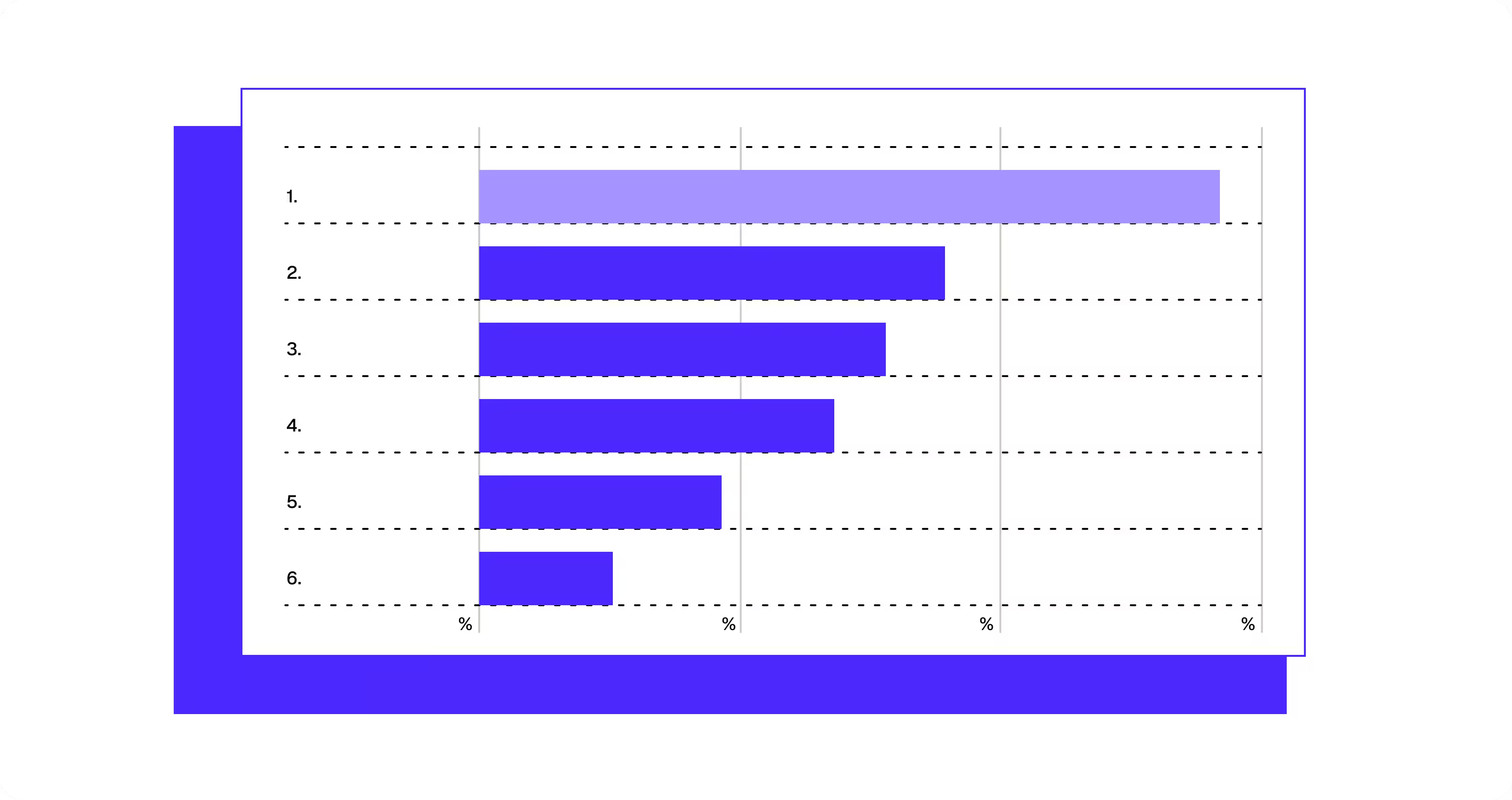
There is a strong correlation between the success of the project and meeting its objectives and effective change management. The data points from Prosci Best Practices in Change Management represent the percentage of participants who met or exceeded objectives in each of the change management effectiveness categories. Of the participants that had excellent change management programs in place, 93% met or exceeded objectives. In other words, the chances of meeting or exceeding the project’s objectives are 6 times higher if there is excellent change management effectiveness.
Based on Prosci’s findings, many organizations are still reluctant to fully invest in change management until they believe that there are real benefits outweighing the costs. This is where cost-benefit analysis comes into play.
Costs of change management can be divided into primary and secondary costs, with each represented in the table below:
In addition to significantly increasing the probability of meeting the project’s objectives, there are 4 other main benefits of change management:
For each project objective, ask yourself:
Is meeting this objective dependent on people doing their jobs differently?
If yes, what percentage of these benefits result from people doing their jobs differently?
So is allocating a budget for change management and adoption a must?
"Cloud for Work enhances Powell 365, streamlining digital content for improved employee communication and productivity. We’re excited to work with the Cloud for Work team to elevate the digital workplace for our customers," said Cyril de Queral, CEO.
— Casting director at Lionsgate
Allocating a budget for change management and adoption is essential. Each change has its own amount of dependency on adoption and usage depending on many factors, such as:
We start with your business, not the tools.